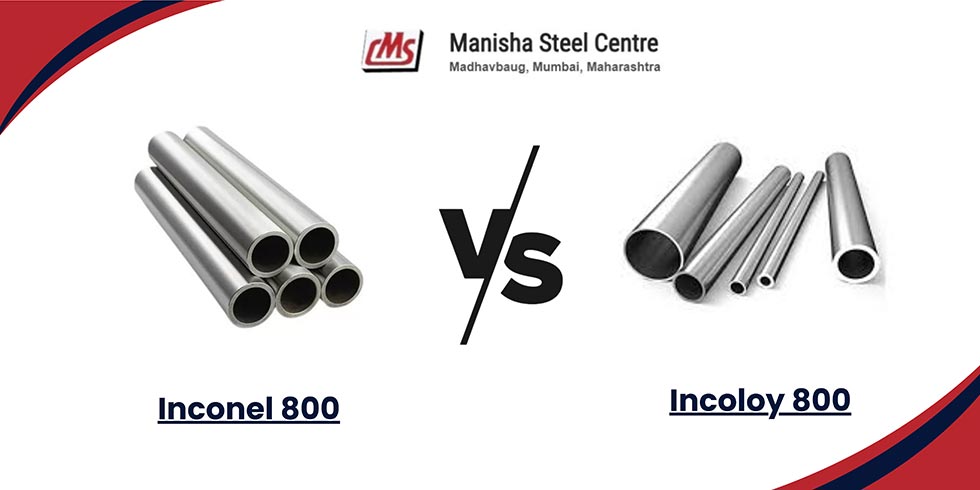
| Property | Inconel 800 | Incoloy 800 |
|---|---|---|
| Alloy Composition |
|
|
| Corrosion Resistance | Good oxidation resistance up to 2000°F (1093°C) | Similar to Inconel 800, effective at temperatures up to 2200°F (1204°C). |
| Temperature Resistance | Effective up to 1500°F (815°C) | Effective up to 1600°F (870°C) |
| Mechanical Strength |
|
|
| Applications |
|
|
| Welding Ability | Good weldability | Good weldability |
| Magnetic Properties | Non-magnetic in the annealed condition. | Non-magnetic in the annealed condition. |
| Cost | Generally more expensive due to higher nickel content | More cost-effective |
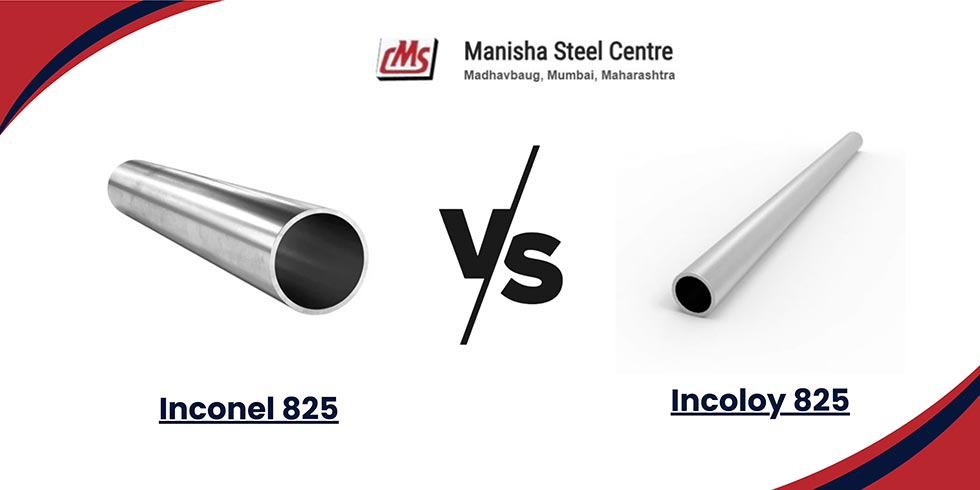
| Application | Inconel 825 | Incoloy 825 |
|---|---|---|
| Corrosion Resistance | Resistant to acids like sulfuric, phosphoric. | Resistant to reducing acids and high-temperature environments. |
| High-Temperature Resistance | Effective up to 1800°F (982°C). | Resistant to oxidation, effective up to 1800°F (982°C). |
| Oil and Gas | Used in piping, downhole tools. | Common in offshore platforms, pipelines. |
| Waste Treatment | For waste gases, furnace stacks. | Used in high-temperature waste environments. |
| Nuclear Industry | Occasionally used in fuel processing. | Common in reactors and fuel reprocessing. |
| Marine Applications | Heat exchangers, piping in seawater. | Resistant to seawater corrosion in marine systems. |
| Material | Price Range (per kg) | Application |
|---|---|---|
| Inconel 625 | $40 - $55 | High-temperature, corrosion-resistant applications |
| Incoloy 825 | $30 - $45 | Corrosion-resistant in acidic environments, used in oil & gas, nuclear, and chemical industries. |
| Property | Inconel | Incoloy |
|---|---|---|
| Composition | Nickel-Chromium, Mo, Nb | Nickel-Iron-Chromium, Mo, Cu, Ti |
| Size Availability | Pipes (2"-12"), Bars (0.5"-2"), Plates, Tubes | Pipes (1/4"-10"), Bars, Sheets, Plates |
| Temperature Resistance | Up to 2200°F (1204°C) | Up to 1300°F (704°C) |
| Corrosion Resistance | Excellent, especially at high temperatures | Good in acidic and sulfide environments |
| Applications | Aerospace, chemical, gas turbines, reactors | Chemical processing, petrochemical, marine |
| Property | Inconel | Incoloy |
|---|---|---|
| Temperature Resistance | Up to 2200°F (1204°C) | Up to 1300°F (704°C) |
| Oxidation Resistance | Excellent at high temperatures, up to 2200°F | Good, typically below 1300°F |
| Corrosion Resistance | Superior in high-stress and high-temperature environments | Good in acidic and corrosive environments (sulfides) |
| Strength | High strength at elevated temperatures | Moderate strength |
| Applications | Aerospace, gas turbines, chemical reactors | Chemical processing, petrochemical, nuclear reactors |